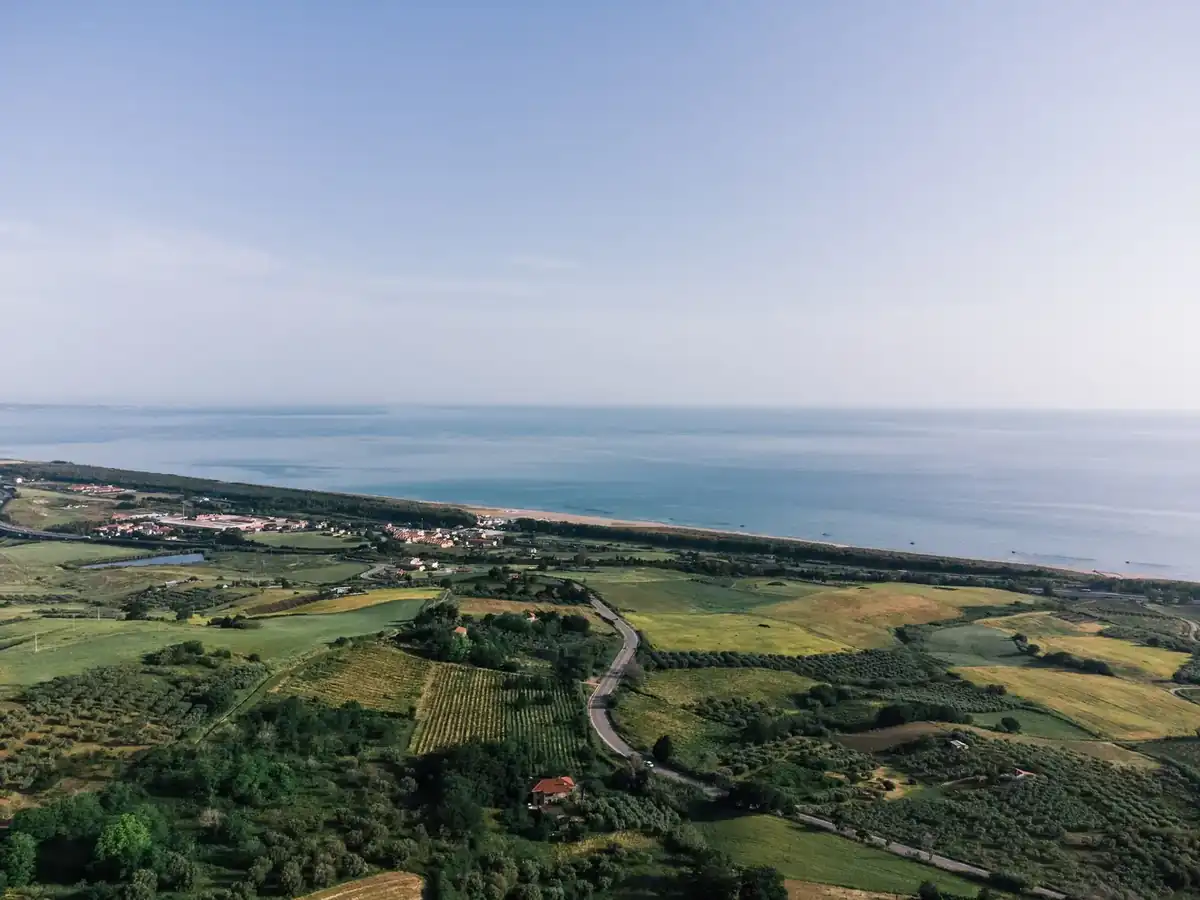
Molise, seen from Petacciato
A small region between the Apennines and the Adriatic that most of our guests had never seen. You leave after breakfast and are back for sunset.
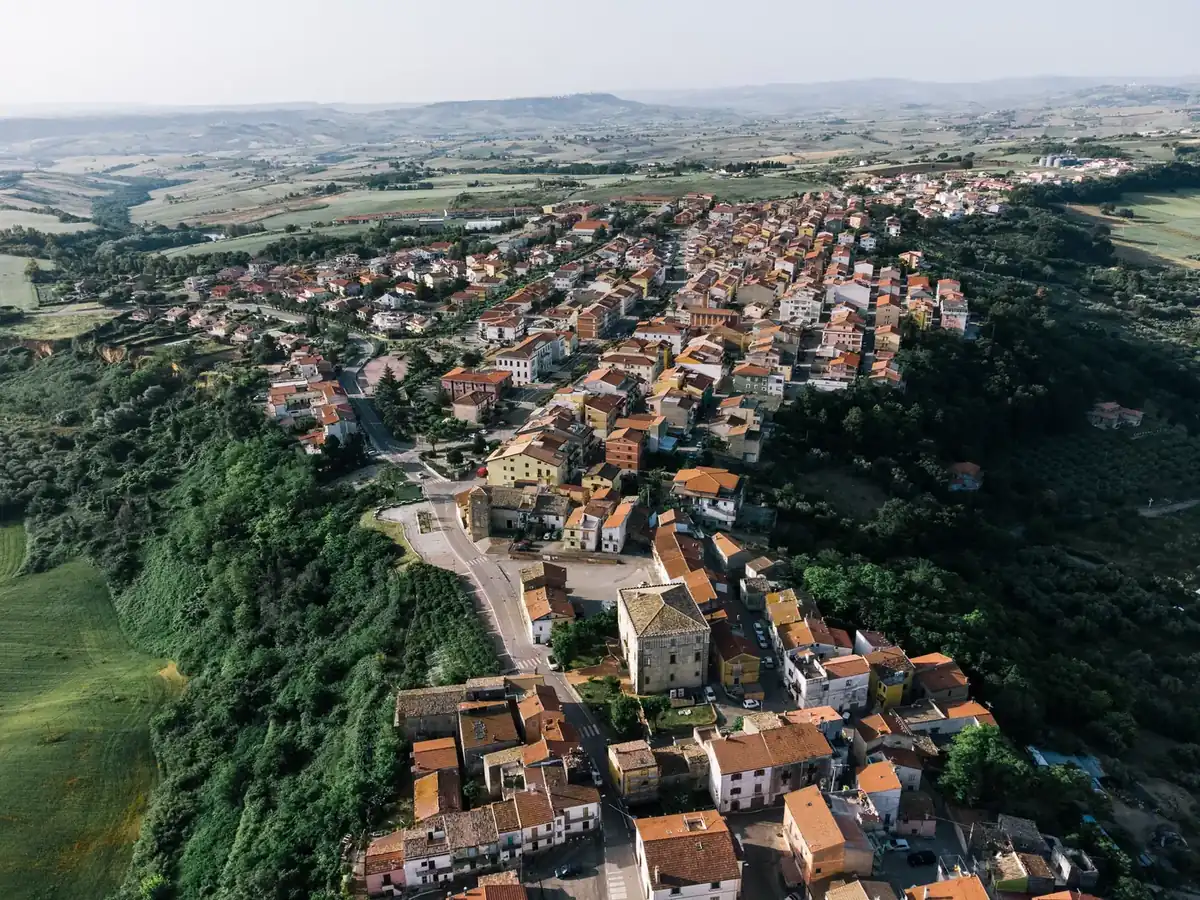
Petacciato
The village sits on a ridge a few kilometres from the sea. Up top, the old village and the Palazzo Ducale Battiloro; down below, the marina, a wide beach and dunes. Along the coast ran the Tratturo Magno, the grass track of the transhumance between L'Aquila and Foggia: for centuries the flocks passed here, parallel to the sea.
At the end of October the Molise Trail, a bicycle journey along the tratturi, starts from Petacciato.
The beach and seven day trips
Driving times from the house, measured on Google Maps. Opening hours and tickets change: check them before you go.
8 minutes
The beach at Petacciato Marina
From June to September you just drive down: a wide beach, dunes, shallow water. Lido Eva is our beach of choice; from 1 June to 20 September our guests get a parasol and two sunbeds for €18 a day, and the breakfast voucher works there too. The rest of the year the beach is open and empty, good for walking.
20 minutes
Termoli, the old town on the sea
The old town stands on a walled headland: the Castello Svevo at the entrance, the Romanesque cathedral at the top, lanes in between so narrow you turn sideways. Along the walls you can see the trabucchi, wooden fishing platforms on stilts. At sunset the light falls on the walls.
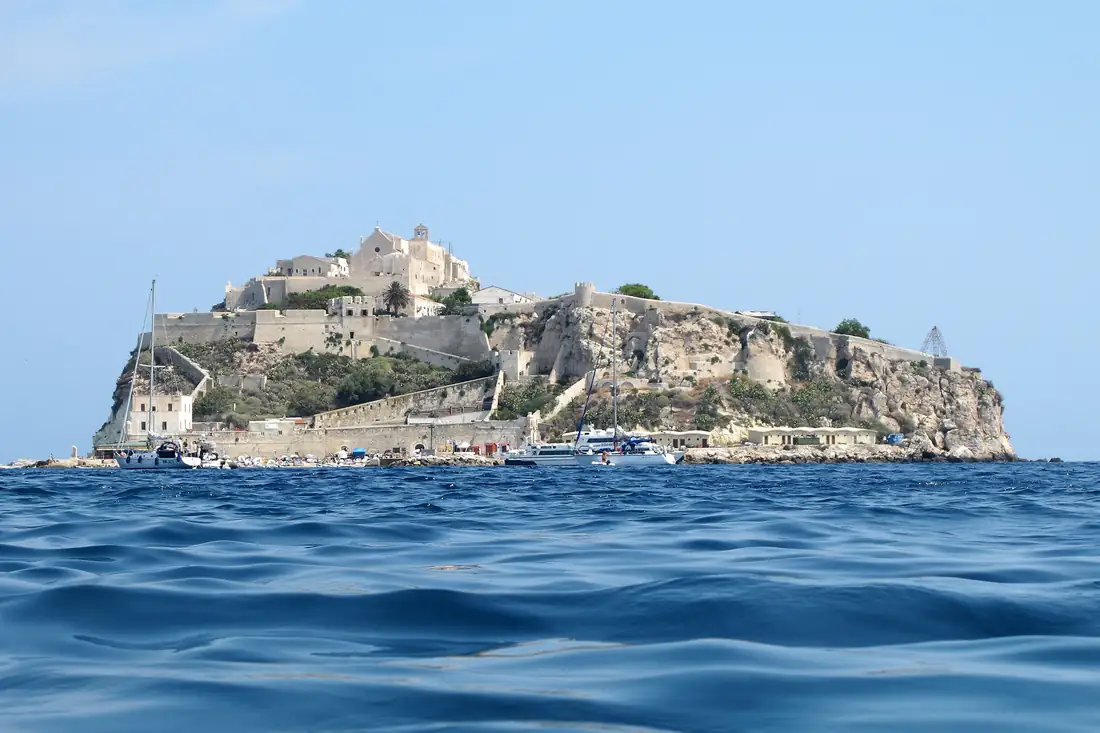
Photo: Giorgio Galeotti, CC BY 4.0, via Wikimedia Commons. 20 minutes to the port, then the ferry
The Tremiti Islands
San Nicola with its fortified abbey on the rock, San Domino with its coves and pines. Ferries leave Termoli all year; in summer there are fast boats too. A full day out, May to September, weather permitting. The islands belong to Apulia; the port is ours.
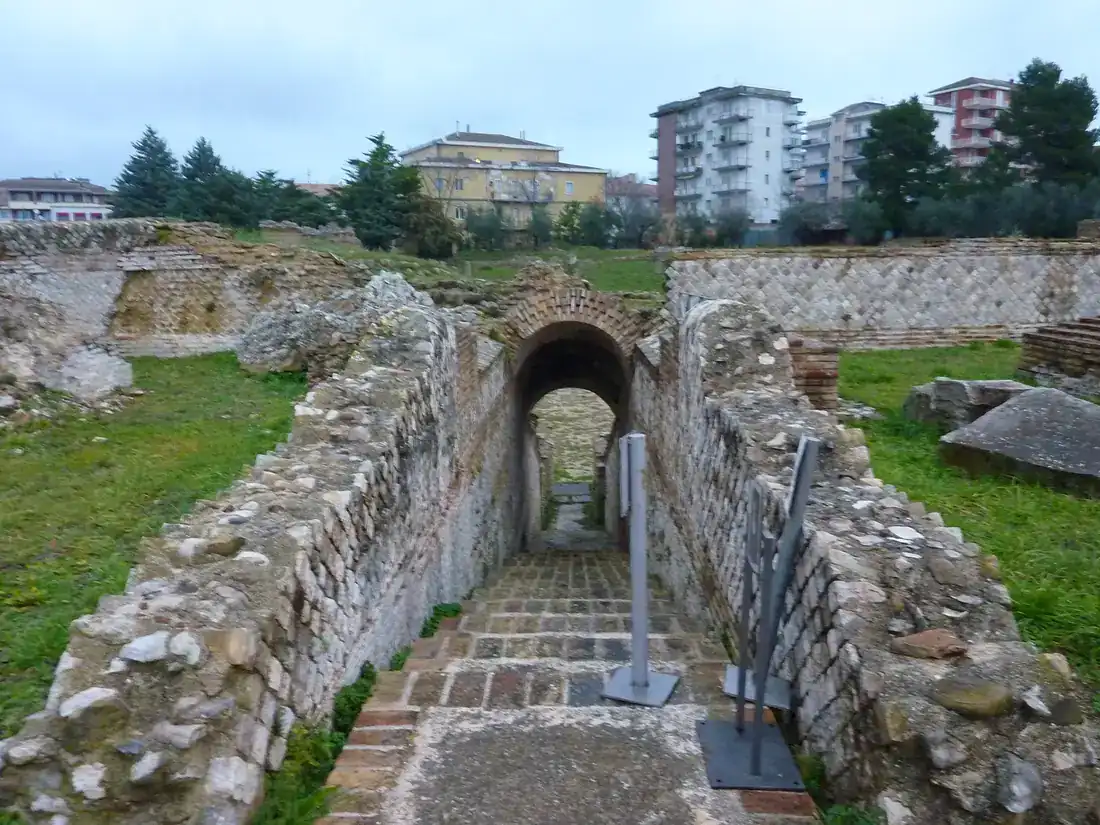
Photo: Pietro Valocchi, CC BY-SA 2.0, via Wikimedia Commons. 40 minutes
Larino and its Roman amphitheatre
Larino was a Roman town and its amphitheatre, partly built and partly dug into the ground, still shows it. In town, the cathedral and the Palazzo Ducale, where the museum keeps Roman mosaics. Best in spring and autumn, on a weekday.
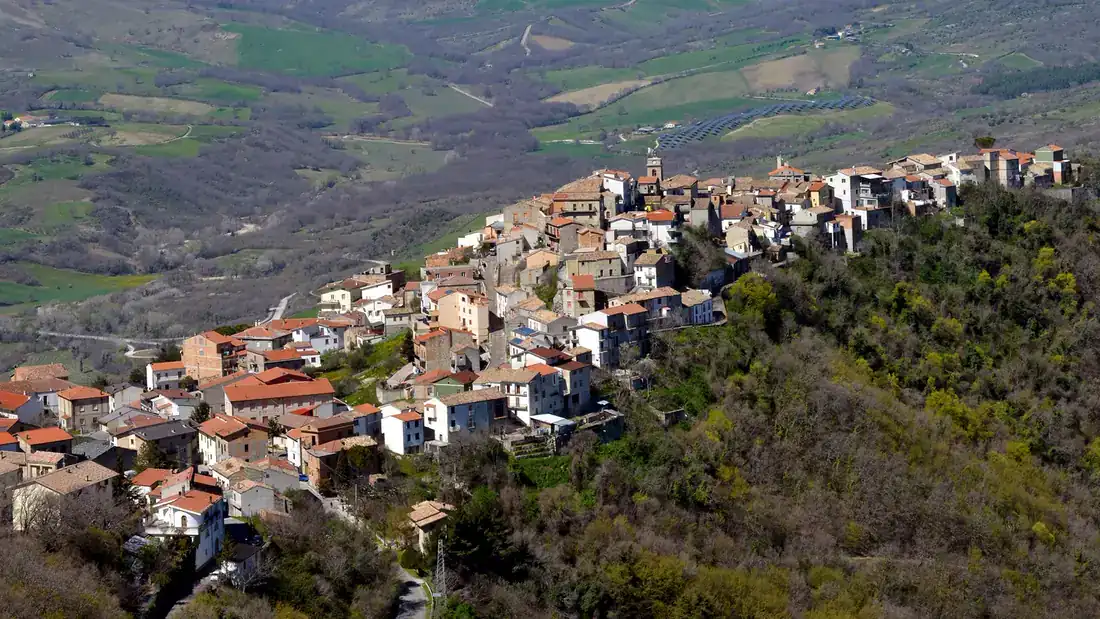
Photo: Matulus, CC BY-SA 4.0, via Wikimedia Commons. 35–40 minutes
The villages that speak Albanian and Croatian
Two languages that crossed the Adriatic five centuries ago are still spoken in lower Molise: arbërisht, old Albanian, in Ururi and Portocannone; na-našu, the Croatian of Dalmatian refugees, in Acquaviva Collecroce, Montemitro and San Felice. Small villages, bilingual signs, hills of wheat. On 3 May Ururi races the Carrese, carts pulled by oxen.
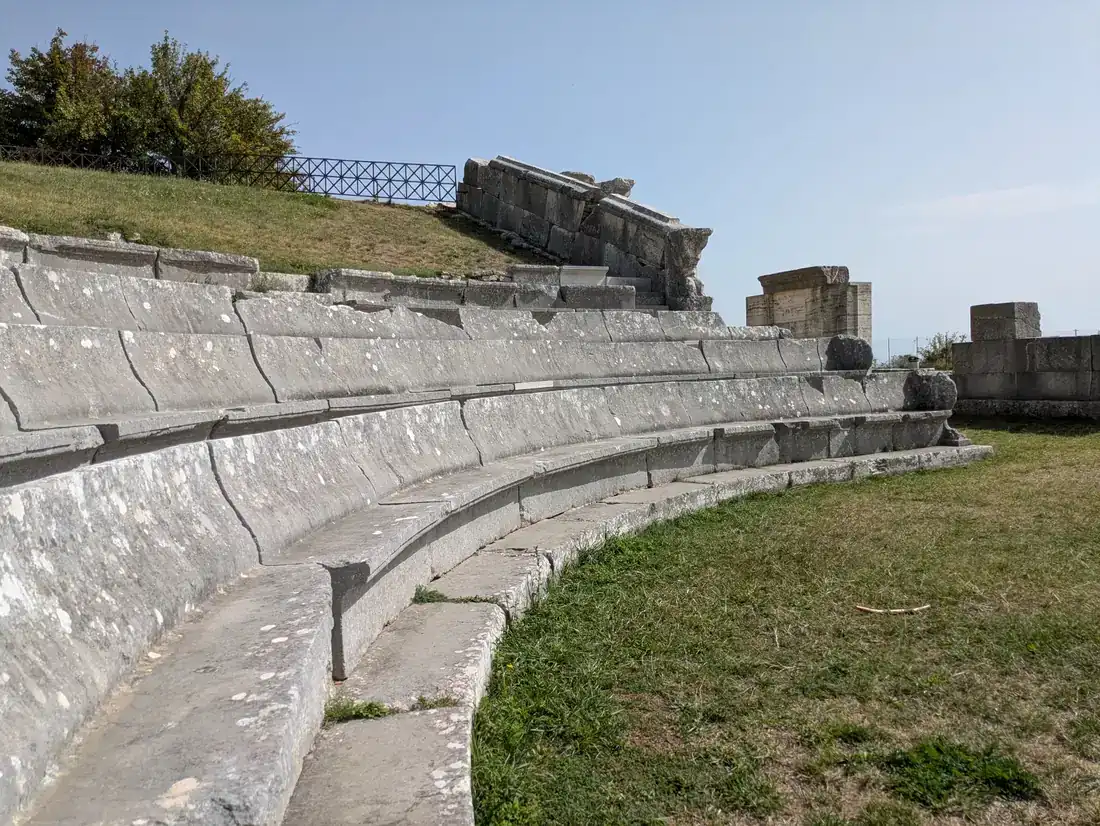
Photo: Accurimbono, CC BY-SA 4.0, via Wikimedia Commons. a full day
Pietrabbondante and Agnone
The sanctuary at Pietrabbondante is the most important monument of the Samnites: a theatre with stone seats shaped like backrests, facing the mountains. Half an hour on, in Agnone, the Marinelli foundry has been casting bells for centuries; the museum and foundry can be visited with a guide. About three hours’ driving there and back: a trip for stays of three nights or more.
1 hour 30
Saepinum, a Roman town on the tratturo
At Altilia, near Sepino, a Roman town still stands among farmhouses: four gates, the forum with its columns, the paved main street. The Pescasseroli–Candela tratturo still runs through it. Few people even in summer; pair it with lunch inland.
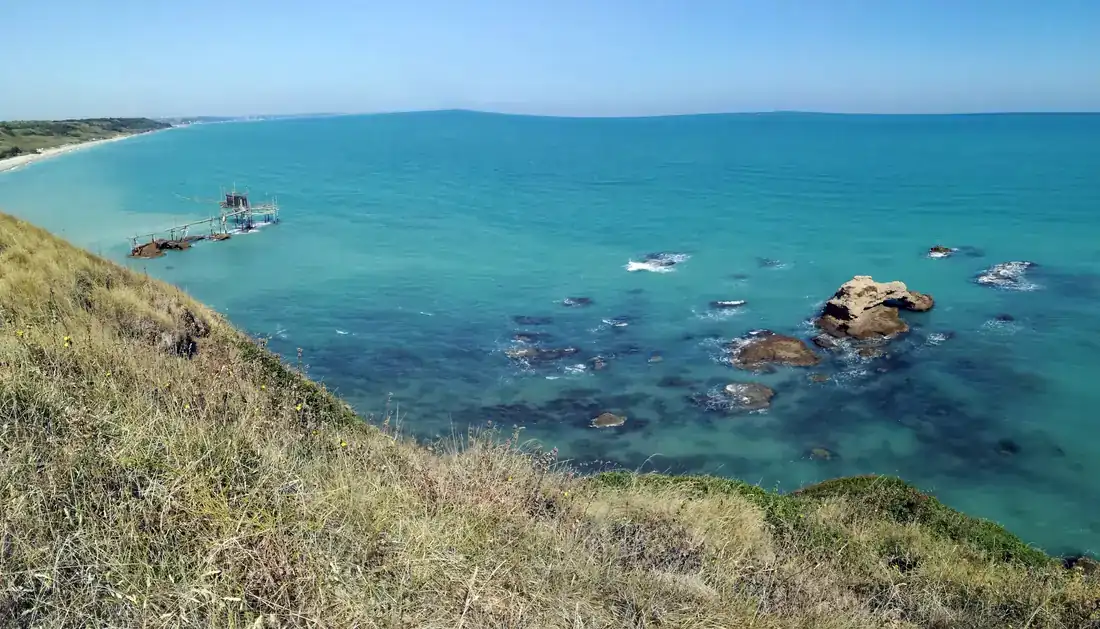
Photo: Horcrux92, CC BY-SA 4.0, via Wikimedia Commons. 40 minutes – 1 hour
Vasto, Punta Aderci and the trabocchi
Over the border in Abruzzo. The Punta Aderci reserve protects a headland and beaches of sand and pebbles, free to visit. Further north begins the Costa dei Trabocchi and the Via Verde, a flat cycle path along the sea on the old railway line. Some trabocchi are restaurants; book ahead.


